Transforming Treatment for Lysosomal Storage Disorders

Delivering gene and RNA therapies to correct enzyme deficiencies and protect the brain

Understanding Lysosomal Storage Disorders

Lysosomal storage disorders (LSDs) are a group of rare inherited metabolic diseases caused by defects in specific lysosomal enzymes, transport proteins, or cofactors.

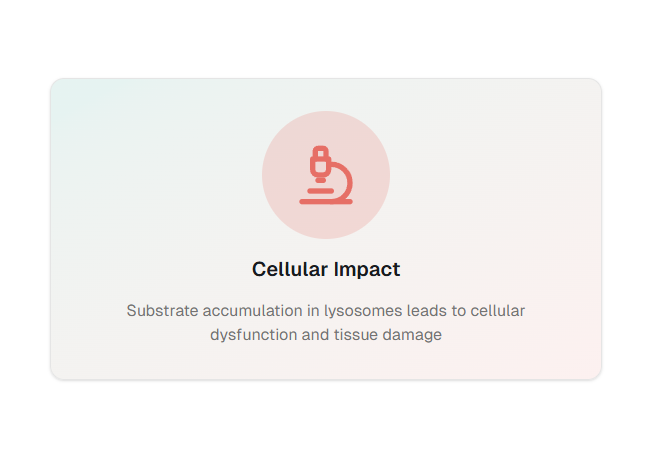
When these enzymes are defective, undegraded substrates accumulate inside cells, leading to progressive multi-organ dysfunction affecting the CNS, musculoskeletal system, cardiovascular system, liver, spleen, eyes, and skin.

More than 50 distinct LSDs have been identified, affecting an estimated 1 in 5,000 to 7,000 live births worldwide.

Symptoms and Systemic Impact

LSDs affect multiple organ systems with varying severity and progression

Neurological

Cardiac & Skeletal

Other Systems

Current Treatment Landscape

Existing therapies have limitations, particularly for CNS involvement

Enzyme Replacement Therapy

IV infusion of recombinant enzyme. Limited CNS penetration.

Substrate Reduction Therapy

Oral medications to decrease substrate production.

Stem Cell Transplantation

Continuous enzyme source for selected LSDs when performed early.

Supportive Care

Symptom management and quality-of-life support.

Symptom management and quality-of-life support.

Research and Development Progress

Platform Validation

Multiple LSD models tested

CNS Biodistribution

Blood-brain barrier crossing confirmed

Preclinical Efficacy

Enzyme restoration demonstrated

Regulatory Engagement

Pathway discussions initiated

Advocacy & Community Support

We are committed to supporting patients and families through educational resources, genetic counseling, and clinical trial guidance.

Patient Organizations

Global network partnerships

Patient Organizations

Global network partnerships

Partner With Us

Join us in advancing gene therapy solutions for lysosomal storage disorders through collaborative research and clinical development.

Scroll to Top